The camera has shown a crack in the clay tile, or a run of open joints, or no tile at all. The chimney cannot be used for wood the way it is. On an older house there are three honest ways forward, and they differ a great deal in cost, in what they leave you with, and in how much of the original chimney survives.
We work on older chimneys in Lynwood and the surrounding cities, and these are the three options we put in front of owners, with the trade-offs as we see them.
Option one: reline the flue
A new liner goes inside the old one. For most older brick chimneys that means a stainless steel liner, sized to the fireplace or the appliance it serves, lowered through the old tile from the top and finished under a new cap. Where the space around it allows, the liner is wrapped in insulation, which keeps flue gases hot enough to draw well and protects the brick from heat.
What it keeps. The whole chimney, inside and out. The brick, the crown and the fireplace stay as they are.
What it suits. A stack that is sound from the outside, with damage limited to the tile. This is the most common case we see.
What to watch. Very large old fireplace openings sometimes need a bigger flue than the chimney can take once a liner is inside. We measure that before recommending a liner for an open fire, and if the numbers do not work we say so.
A cast-in-place liner, poured around a form inside the old flue, is a second relining method. It suits some chimneys with irregular flues but fills more of the space and costs more on most. See our chimney liner installation page for the detail.
Option two: rebuild the damaged section
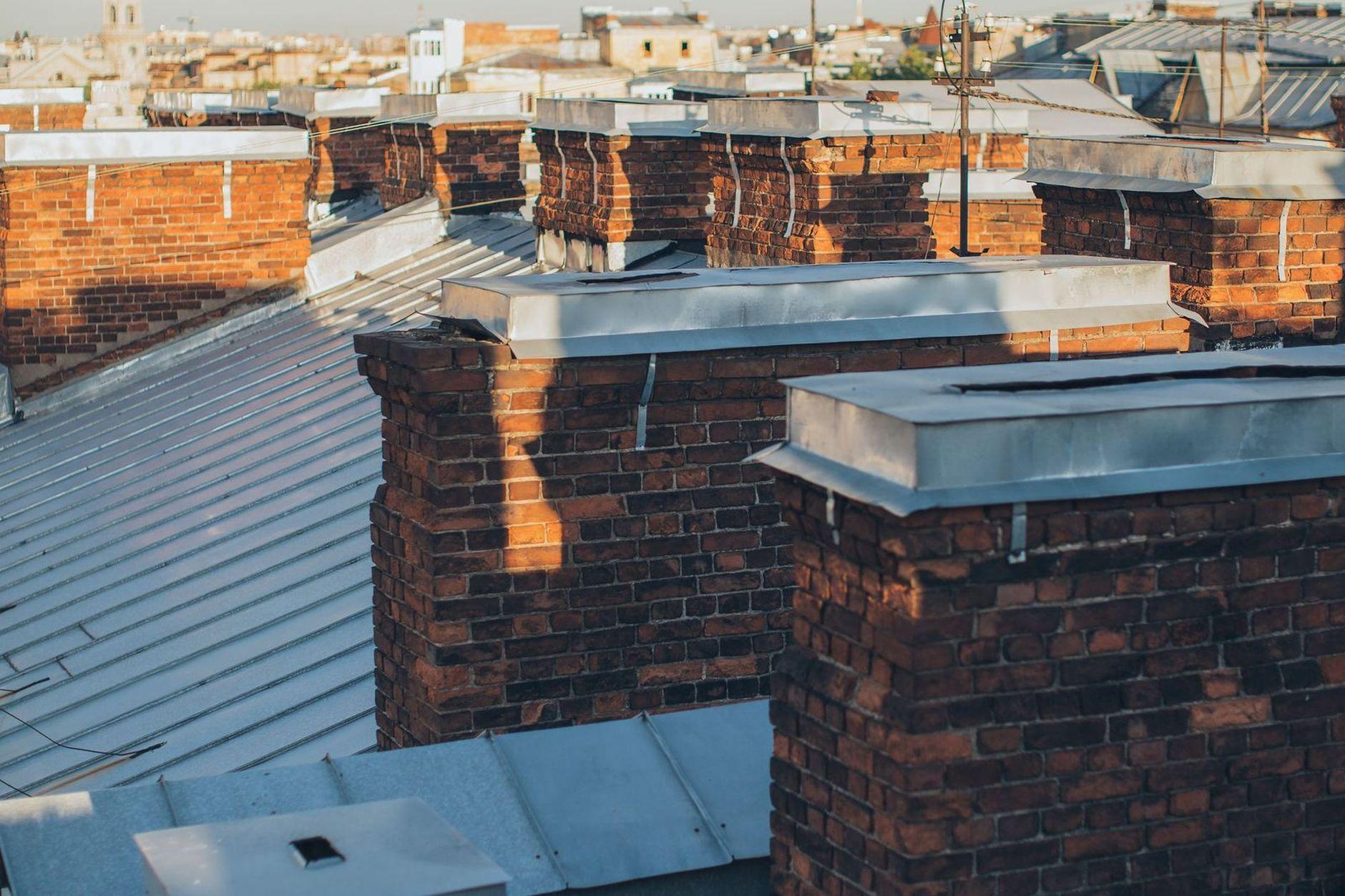
When the damage is in the top of the flue and the brick around it has gone loose too, lining alone leaves a weak stack above the roof. Taking that section down and relaying it with new clay tile fixes both problems at once.
What it keeps. Everything below the rebuilt section, including the fireplace and most of the chimney.
What it suits. Stacks with loose or leaning brick above the roof, often after a quake, as well as damaged tile.
What to watch. It is the most labor-heavy option on the outside of the house. Matching brick and mortar to the old work is part of doing it properly, and on some roofs reaching the chimney safely adds to the job. Our chimney rebuild page shows what is involved.
Option three: retire the flue behind a gas insert
If you want heat more than a wood fire, a gas insert can take the place of the open fireplace. The insert is a closed steel firebox with its own vent run up through the old flue, so the clay tile no longer carries any exhaust at all. The opening and the surround stay as they are.
What it keeps. The look of the room, the brick and the chimney.
What it suits. Owners who rarely burn wood, or who want a fire that starts with a switch.
What to watch. You give up the wood fire. The chimney top still needs to be sound and capped.
How the three compare
| Reline | Rebuild a section | Gas insert | |
|---|---|---|---|
| Keeps the wood fire | Yes | Yes | No |
| Fixes loose brick above the roof | No | Yes | No |
| Original exterior unchanged | Yes | Mostly | Yes |
| Our price | written estimate | written estimate | $2,850 to $5,700 |
Some chimneys need two of these at once: a rebuilt top and a liner below it, for example.
What decides which one fits your chimney
Three things settle it. First, the camera footage: where the damage sits and how far it runs. Second, the brick above the roof: whether it is sound, worn or loose. Third, how you want to use the fireplace. A camera inspection at $400 answers the first two if you do not already have footage. Once we have it, the next step is a written comparison of the options that fit. Tell us what the inspection found, or that you have not had one yet.
Prices that apply to every option
| Item | Our price |
|---|---|
| Flue filmed top to bottom (Level 2) | $400 |
| Cap over the new or old flue | quoted after we measure the flue |
| Sweep before filming a sooty flue | from $430 |
| Water at the stack found and stopped | $570 to $3,400 |
Relining and rebuilding have no list price because the cost follows the chimney: its height, the flue size, bends in the run, the state of the brick and how hard the roof is to work.
Why older chimneys end up here
Clay tile was the right material for its time, and many tile flues in Lynwood houses are still sound. But tile is brittle. Decades of heating and cooling, a few strong quakes, a chimney fire nobody noticed, or a gas appliance venting wet exhaust into it will all crack it eventually. None of that is a failure of the original builder. It is age.
Questions we hear
Can I keep using the fireplace until I decide? Not for wood if the flue is cracked. Heat and embers can reach the brick and the framing beside it.
Does relining hurt the value of an original chimney? Not in our view. The liner is out of sight, and the chimney becomes usable again.
Will a gas insert need a liner? Yes, it comes with its own vent, sized for that insert. That is what lets the old tile retire.
When you are ready to compare the options for your own flue, start on our contact page and tell us which of the three you are leaning toward.
Sounds Like Your Chimney?
Wolcott Chimney Contractors repairs brick, crowns and fireboxes on older houses, matches mortar to the original, and sends photos of the work. The crew works out of Lynwood and serves South Gate, Hawthorne, Carson and cities across the county.